Introduction: Personal and Ethical Foundations
The Personal and Ethical Foundations competency combines personal beliefs, the ethics of the practice, as well as the beliefs of institutions. Practitioners must reckon with the sometimes complicated relationship between personal ethics and those of institutions of higher education. This competency concerns developing the skills to discern how to proceed when those beliefs are at odds. These foundations are critical when it comes to understanding our power and role as student affairs professionals regarding ethics and professional conduct. Additionally, there is an emphasis on healthy work-life balance and wellness.
Application of Personal and Ethical Foundations
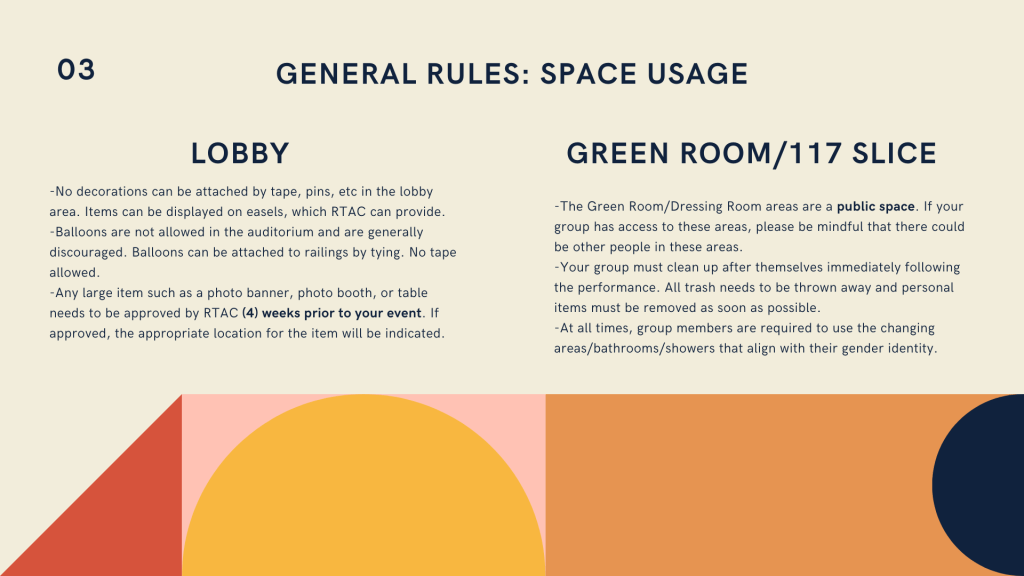
One component of this competency is articulating key elements of one’s set of personal beliefs and commitments as well as their source. As part of my responsibilities at the Robsham Theater Arts Center, I assist in generating guidelines for student group usage of our main stage, and am in charge of communicating those guidelines. One issue that came up last year was the use of the gendered restrooms in our green room space. Attending Boston College as an undergraduate and then continuing my studies here, I am well aware of the limited perceptions of gender that the institution holds. My director was adamant about students using the appropriate bathrooms and changing spaces in a public setting and wanted to place extra signs over the bathrooms explicitly listing “women” and “men.” The space has no gender-neutral or single-stall restroom and is often used by gender non-conforming students in the theater department and otherwise. Knowing that my director was firm on this, but also holding onto my experience as a queer person, I saw the potential harm in being restrictive about space usage. Here came a moment when my values were challenged and forged deeper. I needed to hold steadfast to loyalty with queer and trans* people within a structure that is steeped in a culture of whiteness and traditional Catholicism, and therefore rigid gender binaries. I convinced my director to abstain from these signs as they may alienate already marginalized members of the community without just cause. This year, I explicitly detailed that students should use the bathroom and changing areas that align with their gender identity. The university does not adopt this language, but I hope that a cultural shift may occur in my small actions and the actions of others on campus.
Progress and Future Growth
Looking forward regarding this competency, I hope to grow resilience in developing and standing by my beliefs as they relate to my professional life and the populations I serve. I plan to maintain work-life boundaries while still advocating and working with students with exuberance and care. As professionals in the higher education world, we actively contribute to systems of oppression. I hold that truth in my practice as well as understanding that there is value in individual good actors working to commit to change. Reflecting on my daily actions at the institutions I work for to ensure they align with my personal values will help me to ensure I am committed to positive change and ethical standards.







 Emma Roney